 Sacred Valley Peru Tours
Pisac Tour from Cusco: Ruins, Market Days and Tickets
A Pisac tour from Cusco comes in two shapes here: a private ruins day that pairs Ollantaytambo and Pisac with a chef picnic, and a Quechua-led medicinal plants day that skips the ruins entirely. The hilltop site opens from 07:00 to 17:00 and needs the Cusco tourist ticket, S/70 (about $20) for the partial Circuit III. The craft market in town is free and runs biggest on Sunday. This page compares the two tours with prices and inclusions, then covers hours, transport, altitude and market days, alongside Sacred Valley tours across the whole valley.
Pisac Ruins: Hours, Time Needed and Where to Go
The archaeological park sits high above the town, reached by a 10 km paved road up the Chongo valley. Plan your hours before you go, because the visit length changes a lot with the route.
Opening Hours and Visit Length
The ruins open from 07:00 to 17:00, per Nick Kembel. Aracari puts a guided walk of the full site at about one and a half hours, Come See Peru allows about 1.5 hours on its half day and SAM Travel allows over 2 hours. Walking without a guide, Nick Kembel budgets 1 to 2 hours for a short visit, 2 to 4 hours walking down to town through the site, and 4 or more hours if you climb up from town and back.
Nick Kembel also notes that tour groups tend to arrive around 10:00, so an early start buys you quiet terraces. Pick a route before you set off.
| Route | Time needed |
|---|---|
| Guided walk of the full site | about 1.5 hours |
| Short self-guided visit | 1 to 2 hours |
| Walk down to town through the site | 2 to 4 hours |
| Up from town and back | 4+ hours |
What You Walk Through
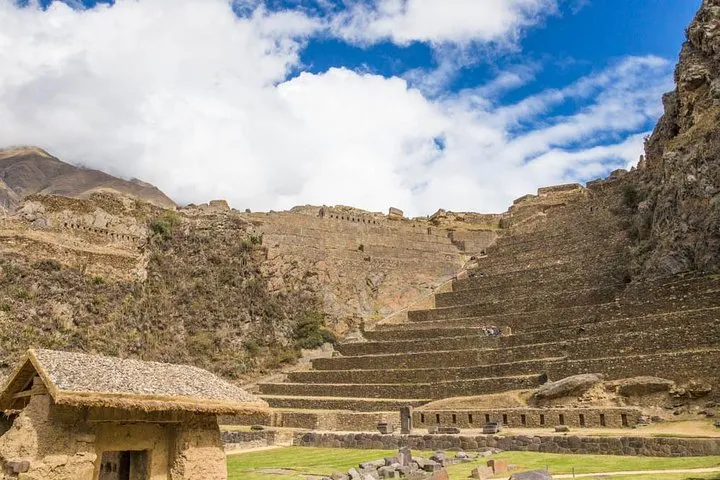
Wikipedia says Pachacuti likely built the complex no earlier than 1440, and it covers over 65.5 hectares between the Kitamayu and Chongo rivers. Pizarro's forces destroyed it in the early 1530s. The main sectors are Qantus Raqay, the ceremonial baths, K'allaq'asa, the Intiwatana and Pisaqa, with more than 20 watchtowers (Kondor Path Tours) and about 500 terraces (Nick Kembel).
Nick Kembel reports that the tunnel route at K'allaq'asa was closed by a landslide, so follow the signs on the day. There is no water sold on the site, so carry at least a litre.
Source: Nick Kembel, Aracari, Wikipedia, SAM Travel, Come See Peru, Kondor Path Tours.
About the Pisac Experience
Hilltop Inca terraces and temples above the town
The Sacred Valley's best-known craft market, biggest on Sunday and also open Tuesday and Thursday
The $197 private tour pairs Pisac with Ollantaytambo. The $55 tour is a medicinal plants walk
Pisac ruins are covered by the Cusco tourist ticket (Circuit III, S/70, about $20)
A chef-made picnic on the $197 tour and lunch on the $55 tour
Cancel up to 24 hours before for a full refund
Check Live Availability & Prices
Real-time dates and prices for the private Ollantaytambo and Pisac ruins tour.
You'll confirm the exact date and time on the secure booking page.
Which Pisac Tour Should You Book?
The two Pisac tours here go in different directions. One is a private ruins day with a farm visit and a chef-made lunch, the other a walk through Andean medicinal plants and farmland. Pick by what you want to see.
- Best for the ruins: the private Ollantaytambo and Pisac tour ($197 per person, 5.0★ from 56 reviews). 8 hours for up to 15 travelers, pickup at 07:00 in Cusco or 08:00 in Ollantaytambo, a farm visit, a picnic lunch by a private chef and the Urubamba local market. The Boleto Turístico is paid on the day.
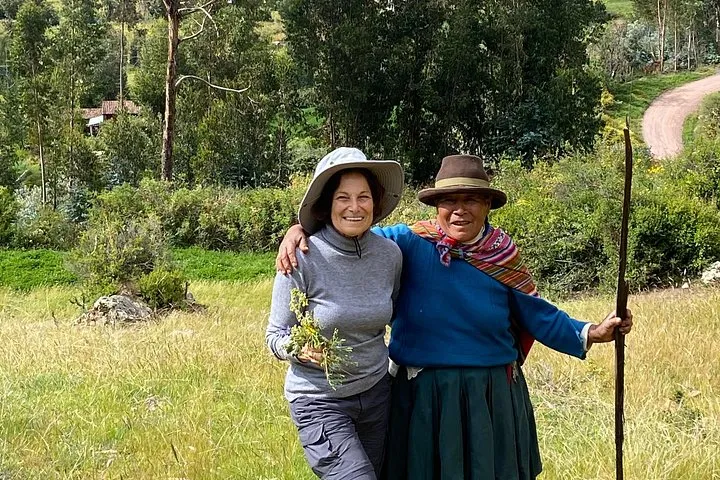
- Best for plants and local life: the Pisac medicinal plants tour ($55, 5.0★ from 28 reviews). 8 hours for up to 10 travelers, lunch included, led on the plant walk by a Quechua-speaking local woman with a translating guide. It is not a ruins tour and the listing mentions no entrance fees.
Pisac Tours Compared
The two Pisac tours on this page. The $197 private day covers the ruins and the $55 day covers medicinal plants and local life. Lunch is included on both.
Pisac Medicinal Plants and Andean Nature Tour with Lunch
An 8-hour experiential day around Pisac focused on Andean medicinal plants, farm landscapes and local culture, led by a Quechua-speaking local with an accompanying guide. Lunch is included and the listing mentions no entrance fees. It suits curious travellers who prefer people and plants over ruins.
- Cancellation
- Free cancellation 24h
- Operator
- Paquito tours
A plants and culture day, not a ruins tour. No entrance fees are mentioned.
Private Ollantaytambo and Pisac Ruins Tour with Farm Visit and Gourmet Picnic Lunch
A private 8-hour day pairing Ollantaytambo and Pisac ruins with a farm visit, a chef-made picnic lunch and the Urubamba local market. The Boleto Turistico, S/70 partial or S/130 full, is paid on the day. It suits couples and families wanting food and ruins at a slow pace.
- Cancellation
- Free cancellation 24h
- Operator
- Valentins Pachamama Journeys
Private tour with a farm visit and a chef-prepared picnic lunch. The Boleto Turistico (S/70 partial or S/130 full) is paid on the day.
Pisac Tour Prices and What a Ticket Adds
On the private ruins day the entrance ticket is extra, and the plants day lists no entrance fees. Here is what each option costs once the tourist ticket is added.
The Two Tours on This Page
The medicinal plants day costs $55 per person and the listing mentions no entrance fees, so ask the operator whether any site charge applies. The private ruins day costs $197 per person and excludes the Boleto Turistico. COSITUC lists the partial Circuit III ticket at S/70 (about $20) for 2 days, covering Pisaq, Ollantaytambo, Chinchero and Moray, so S/70 covers the two sites that tour visits.
That makes the all-in cost about $217 with the partial ticket, or about $235 with the full S/130 (about $38) ticket at 3.43 soles per dollar. For reference, Come See Peru lists a private half day from Cusco at $90 per person for 2 travellers, down to $50 for 7 or 8.
| Option | Tour price | Ticket on the day | All-in |
|---|---|---|---|
| Medicinal plants day, group up to 10 | $55 | not stated on the listing | $55 plus any site charge |
| Private Ollantaytambo and Pisac, partial ticket | $197 | S/70 (about $20) | about $217 |
| Private Ollantaytambo and Pisac, full ticket | $197 | S/130 (about $38) | about $235 |
| Group full days with a Pisac stop | from $25 | S/70, plus S/20 for the salt mines, named in the listings | confirm at checkout |
Where the Ticket is Sold
The boleto is sold at the COSITUC office on Av. El Sol in Cusco and at the entrance of some included sites including Pisac. Many sites take cash in soles only, and card payment carries a 3.15% fee where accepted.
The market in town is free to walk, so a market-only visit costs you nothing but the ride. The tourist ticket page has the full site list and validity rules.
Source: COSITUC, Come See Peru.
Getting to Pisac From Cusco: Tour, Van or Taxi
Pisac sits about 32 km northeast of Cusco. Three ways exist to cover the trip, and the price gap between them is wide.
Van, Taxi or Booked Day
Oops I Booked Again puts shared vans to Pisac at Puputi street in Cusco, about S/4 (about $1) and about 40 minutes, leaving when full rather than on a timetable. From the town the ruins are a 15 to 20 minute drive up a 10 km paved road. Nick Kembel gives a one-way taxi from town to the ruins as 25 soles in the past and commonly 30 to 40 soles now, with a return and driver waiting at about 50 to 60 soles.
A booked day removes the driving: the medicinal plants day meets at the Belen portal on Cusco's main square, and the private ruins day picks up at your hotel at 07:00 in Cusco or 08:00 in Ollantaytambo. The full-day group tours cover Pisac as part of a longer valley circuit.
| Way to go | Cost | Time |
|---|---|---|
| Shared van from Puputi street | about S/4 (about $1) each way | about 40 min |
| Taxi, town to ruins one way | S/30-40 (about $9-12) | 15-20 min |
| Taxi, return with waiting | about S/50-60 (about $15-18) | your day |
| Booked tour | from $55 | 8 hours |
What a Tour Adds
A tour gives you pickup, a driver and a guide, but neither tour on this page lists the Pisac craft market as a stop. The private ruins day pairs Ollantaytambo with Pisac and adds a farm visit and a chef picnic, while the group full days run wider circuits through Chinchero, Moray and the Maras salt mines. If the market matters to you, go by van and add the town on foot, or arrive early by tour and leave time before lunch.
Source: Oops I Booked Again, Nick Kembel, Wikipedia, Aracari.
Pisac Tours at a Glance
| Tour | Duration | Price | Includes | Rating | Book |
|---|---|---|---|---|---|
| Private ruins day | 8 h | $197 | Ollantaytambo · Pisac ruins · farm · Urubamba market | 5.0★ (56) | Check Availability Details |
| Plants and culture | 8 h | $55 | Medicinal plants walk · lunch | 5.0★ (28) | Check Availability Details |
Prices are per person. Figures current in Q4 2026.
What You'll See at Pisac
Pisac has two halves. The Inca site crowns a ridge high above the modern town, and the craft market sits in the town square below. The $197 tour covers the ruins, while the $55 tour covers the plants and farmland around Pisac.
Neither lists a stop at the Pisac craft market, so plan that visit yourself.
- The hilltop citadel: steep agricultural terraces fanning down the ridge, ceremonial baths and the Intihuatana temple complex
- Long views down the Urubamba valley from the upper terraces
- The Pisac market: stalls of alpaca knitwear, textiles, ceramics and silver, plus a bakery known for its giant clay ovens
- Empanadas and fresh bread baked in the town's traditional adobe ovens
- On the $197 tour, a farm visit with chicha and guinea pigs and the Urubamba local market

How a Pisac & Sacred Valley Day Flows
-
07:00
Hotel pickup
The private tour picks up at your Cusco hotel at 07:00, or at 08:00 in Ollantaytambo. The $55 plants tour instead meets at the Belen portal on Cusco's main square, with no start time stated.
-
Morning
Ollantaytambo ruins
The terraced fortress and living Inca town, with a moderate amount of walking and stairs.
-
Late morning
Farm in Yanahuara
A farm visit with chicha and guinea pigs.
-
Midday
Picnic lunch
A gourmet picnic lunch made by a private chef.
-
Afternoon
Urubamba local market
A stop at the local market in Urubamba.
-
Afternoon
Pisac ruins
The hilltop terraces and temples, on the Boleto Turístico paid on the day.
-
End of day
Hotel drop-off
Drop-off is included. The listing gives no return time.
Pisac Altitude and Acclimatisation
Pisac sits lower than Cusco, which makes it a gentle introduction to the Sacred Valley, but the ruins themselves climb well above the town.
Heights and How to Handle Them
The town sits at about 2,972 m, lower than Cusco at about 3,399 m, and Salkantay Trekking notes many travellers use it for acclimatisation. The ruins are higher than the town, and sources differ: Kondor Path Tours gives about 3,300 m, Nick Kembel 3,350 m with a viewpoint at 3,525 m, and Wikipedia 3,446 to 3,514 m. Nick Kembel describes walking the ruins as strenuous and advises against it on day 1 or 2 in Cusco.
If you are not yet acclimatised, take a taxi to the top entrance and walk down rather than climbing up from town, and keep the pace slow on the terraces.
| Place | Altitude |
|---|---|
| Pisac town | about 2,972 m |
| Pisac ruins | about 3,300 to 3,525 m, sources differ |
| Cusco | about 3,399 m |
Packing for the Height
Bring sturdy shoes, sun protection, at least a litre of water, a rain layer and cash in soles for the ticket. There is no water on sale inside the archaeological park. The private ruins day recommends comfortable walking shoes on its listing.
Source: Wikipedia, Salkantay Trekking, Nick Kembel.
Best Time to Visit Pisac and Which to See First
Timing decides whether you share the terraces with ten buses or walk them alone. The order of ruins and market matters too.
Season and Time of Day
Salkantay Trekking puts the dry season at April to October, with the rainy season from November to March leaving paths slippery, and calls June to August best for photos. Whatever the season, go early: Nick Kembel says tour groups tend to reach the ruins around 10:00, and weather can turn fast at altitude, so a poncho belongs in your bag all year. The site opens at 07:00.
Ruins First, Market After
Salkantay Trekking advises visiting the ruins first and the market after, so you are not carrying purchases uphill. The market runs officially on Tuesday, Thursday and Sunday, with Sunday the largest. On Sundays the village also holds a Quechua-language mass and a procession led by the mayor, a detail Aracari highlights.
Stalls run smaller on the other days, so if the market is your priority, aim for one of the three official days and do the ruins before it.
Source: Salkantay Trekking, Nick Kembel, Wikipedia, Aracari.
Market Days, Tickets & What to Know
The Pisac market runs on Tuesday, Thursday and Sunday, and Sunday is the biggest. Stalls run smaller on other days. As with the rest of the valley, tour prices do not include the entrance tickets.
- Market days: Tuesday, Thursday and Sunday, with Sunday the busiest. The market itself is free to walk
- Boleto Turístico Circuit III (Sacred Valley): S/70 (about $20), valid two days, covers Pisac ruins plus Ollantaytambo, Chinchero and Moray. The full ticket is S/130 (about $38) for 10 days
- On the $197 tour the ticket is paid on the day: about $217 per adult with the S/70 ticket or about $235 with the S/130 ticket
- Altitude: Pisac town sits at about 2,972 m and the ruins higher, at about 3,300 to 3,500 m depending on the source. Take the terrace climbs slowly, especially early in a trip
- Bring cash in soles for the market and site tickets, sun protection, and closed shoes for the ruins
Where Is Pisac?
Pisac guards the eastern entrance to the Sacred Valley. The ruins sit on the ridge above the town and the market is in the square below.
Pisac Tour FAQs
What is there to do in Pisac?
Pisac has two main draws. Above the town, the Inca citadel spreads across a ridge with steep agricultural terraces, ceremonial baths and the Intihuatana temple. In the town below, the Pisac market sells textiles, alpaca knitwear, ceramics and silver, and a bakery turns out bread and empanadas from giant clay ovens. The private tour on this page covers the ruins, and the cheaper tour covers medicinal plants around Pisac.
What day is the Pisac market?
The Pisac market runs on Tuesday, Thursday and Sunday. Sunday is the biggest and most atmospheric, though also the most crowded, and stalls run smaller on other days. The market is free to walk, and neither tour on this page lists a market stop, so add it before or after your tour.
How much does it cost to visit the Pisac ruins?
The Pisac ruins are covered by the Boleto Turístico (Cusco tourist ticket). The Circuit III (Sacred Valley) ticket costs S/70 (about $20), is valid two days, and also covers Ollantaytambo, Chinchero and Moray. The full ten-day ticket is S/130 (about $38). The $197 private tour lists the ticket as paid on the day, and the $55 tour mentions no entrance fees, so ask the operator.
Where is Pisac in relation to Cusco?
Pisac sits at the eastern entrance to the Sacred Valley, northeast of Cusco. The $197 tour picks up in Cusco at 07:00, and the $55 tour meets at the Belen portal on Cusco's main square. Pisac town is at about 2,972 m, lower than Cusco at about 3,400 m, which makes it a gentler place to start at altitude.
Can you visit Pisac without a tour?
Yes. Colectivos and taxis run from Cusco to Pisac town, and from there you can take a taxi up to the ruins or hike the terrace trail. A tour adds a guide and transport. The private Ollantaytambo and Pisac tour also pairs the ruins with a farm visit and a chef-made lunch.
What are the opening hours of the Pisac ruins?
The Pisac ruins open from 07:00 to 17:00. Nick Kembel says tour groups tend to arrive around 10:00, so entering near opening gives you the quietest terraces. The last entry time is not stated, so start your visit well before closing. Full details are in the hours section.
How long do you need at the Pisac ruins?
A guided walk of the full site takes about 1.5 hours, per Aracari. Without a guide, Nick Kembel counts 1 to 2 hours for a short visit, 2 to 4 hours if you walk down to town through the site, and 4 or more hours for the climb up from town and back. See the route table.
Do I need a guide for Pisac?
No, the site can be walked without one, and Nick Kembel publishes a self-guided route through Qantus Raqay, K'allaq'asa and the Intiwatana while noting guide information can vary in quality. A guide does explain what the sectors were for. The private ruins day includes a local professional guide in the price.
When is the best time to visit Pisac?
Salkantay Trekking puts the dry season at April to October, with June to August best for photos. Go early in the day, because groups reach the ruins around 10:00 and storms can arrive quickly. Market days are Tuesday, Thursday and Sunday. The best time section has more.
Prices, availability and terms are set by the operator and confirmed at checkout.
We may earn a commission if you book through one of our links, at no extra cost to you. Full affiliate disclosure